Hello, Terrell neighbors! As a garage door technician with 15 years of hands-on experience, I have seen it all. From springs snapping in the middle of a freezing winter night to doors falling completely off their tracks just as someone is trying to leave for work. A garage door is the largest moving part of your entire house. When it works, you barely even think about it. But when it breaks down, it can instantly ruin your day, trap your car, or leave your home totally unsecured.
Knowing the difference between a minor hiccup that can wait until the weekend and a true crisis that requires immediate attention is crucial. In this guide, we are going to dive deep into everything you need to know about Emergency Garage Door Repair in Terrell, TX. I will walk you through the most common emergencies, how to stay safe, and how to spot trouble before it turns into a total breakdown.
What Constitutes an Emergency Garage Door Repair in Terrell, TX?
Not every squeak or rattle is an emergency. Sometimes, a noisy door just needs a little bit of spray lubricant. But other times, ignoring the warning signs can lead to massive damage or even severe injury. Let's look at the absolute clear-cut signs that you need to call a professional immediately.
The Door Won't Close (A Major Security Threat)
Imagine it is 10:00 PM on a Friday. You pull into your driveway, hit the button on your remote, and the door goes down halfway before reversing back up. You try again. Same result. Your garage door refusing to close is one of the most common emergencies I respond to.
Why is this an emergency? First and foremost, it is a massive security risk. An open garage door is a neon welcome sign to burglars. Your garage likely houses thousands of dollars' worth of tools, vehicles, and equipment. Even worse, if you have an attached garage, an open door gives intruders direct access to the interior door leading straight into your house. In a tight-knit community like Terrell, we look out for each other, but leaving your home exposed all night is never worth the risk.
Furthermore, an open garage door exposes your home to the elements. Whether it is a classic North Texas summer thunderstorm, heavy winds, or a sudden winter freeze, leaving the door wide open can lead to water damage, frozen pipes, and a home full of pests.
The Door Won't Open (And Your Car is Trapped)
On the flip side, a door that refuses to open is equally frustrating. If you are rushing to get the kids to school in the morning or heading out to work on Highway 80, a trapped car is a massive headache.
Often, this happens because of a broken spring or a fried opener motor. I always tell my customers: never try to use your vehicle to push the door open, and do not try to repeatedly hit the opener button if the door is visibly jammed. You will only burn out the motor and turn a medium-sized repair bill into a massive one. If your car is held hostage inside, that is a genuine reason to search for an Emergency Garage Door Repair in Terrell, TX.
Broken Springs: A Dangerous Situation
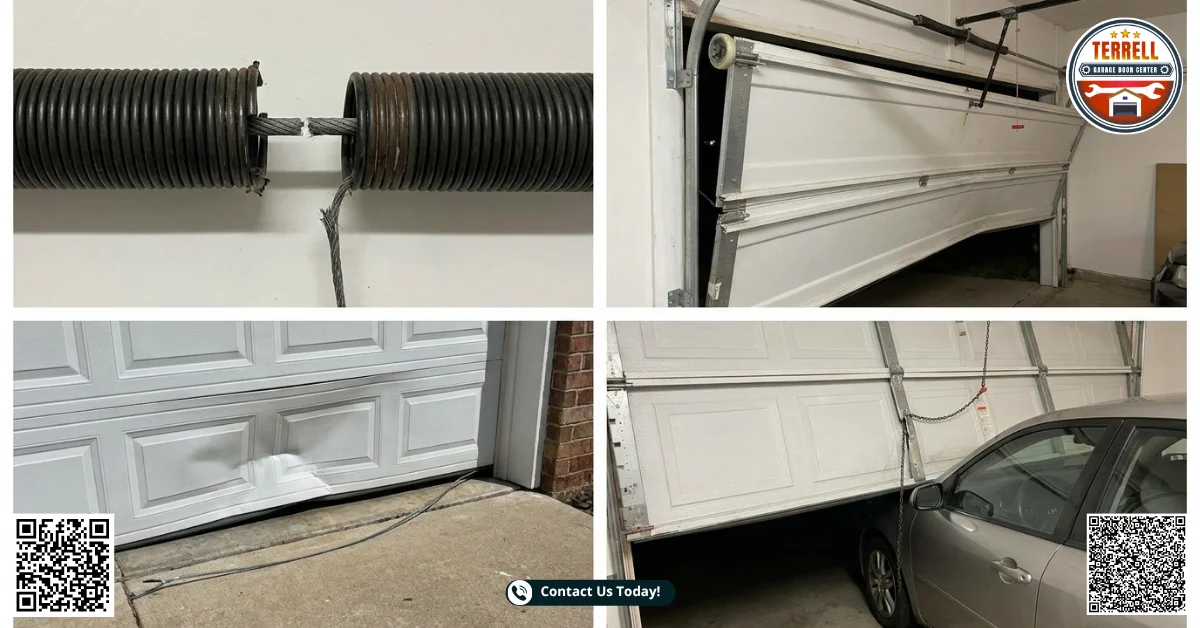
If you are ever in your home and hear a loud noise that sounds like a gunshot or a firecracker coming from the garage, there is a very high chance your garage door spring just snapped.
Garage doors are heavy. A standard double-car steel door can weigh anywhere from 150 to over 250 pounds. The opener motor does not do the heavy lifting; the springs do. The springs act as a counterweight, holding the immense tension required to make that 200-pound door feel light as a feather.
When a spring breaks, all that tension is gone. If the door was open when the spring snapped, the door could come crashing down like a guillotine. If you try to open a door with a broken spring using the automatic opener, the motor will strain, grind, and eventually strip its internal gears. Replacing a spring is highly dangerous work because of the immense torque involved. This is never a DIY job. It requires specialized winding bars and professional training to handle safely. If you're curious about the exact physical dangers involved, you can read more about garage door spring safety risks.
Snapped Cables and Off-Track Doors
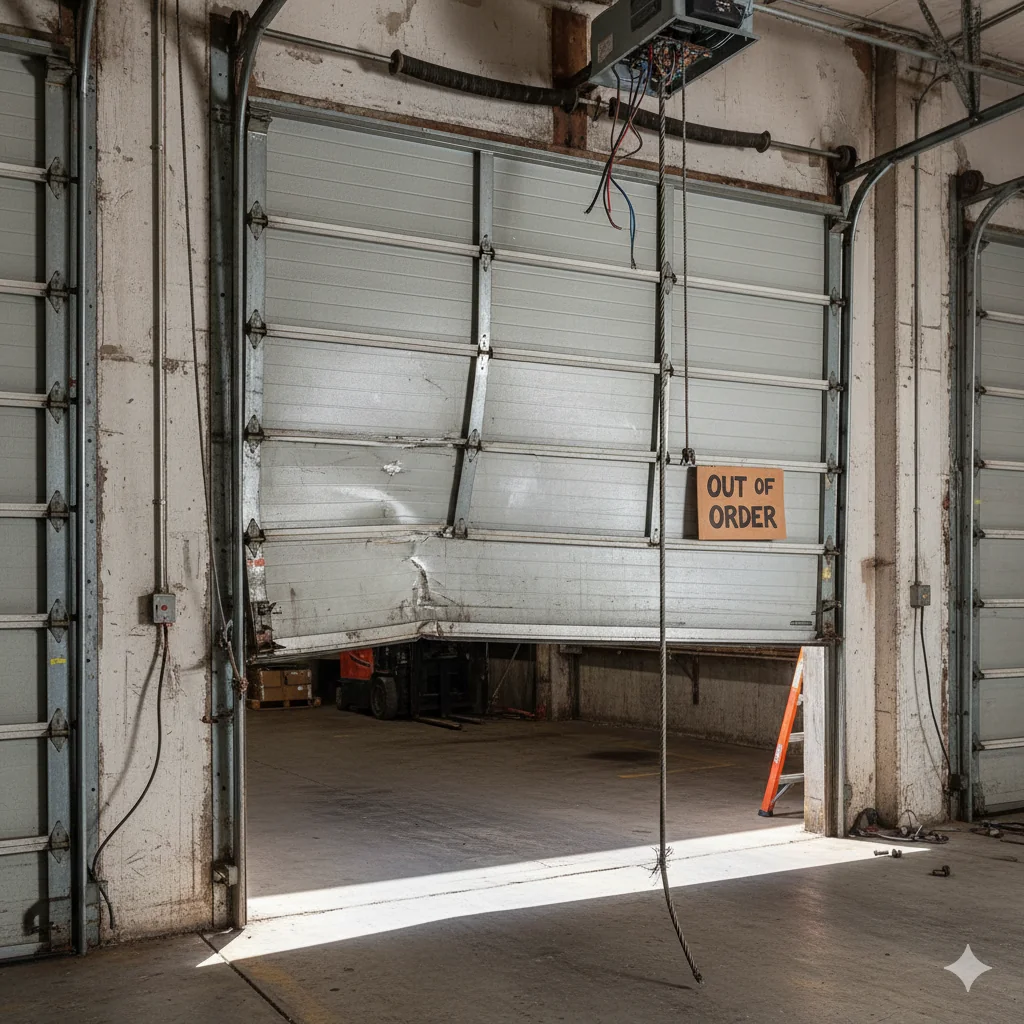
Your garage door runs along metal tracks on either side, guided by small wheels called rollers. Steel cables run alongside the door to assist the springs in lifting. If a cable frays and snaps, the door will instantly sag on one side.
When a door sags, the rollers can easily pop right out of the track. An off-track door will look crooked and might be hanging dangerously overhead. If you see this, stop everything. Do not touch the door. Do not pull the red emergency release cord. An off-track door can completely detach and fall on you, your car, or a family member. Call an expert right away to safely secure the heavy panels and reset the system.
Why You Shouldn't Wait: The Risks of Delaying Repairs
As a technician, I understand that home repairs are never fun to pay for. It is tempting to look at a sagging door and say, "I'll just deal with it next month." However, ignoring a struggling garage door is a recipe for disaster.
Safety Hazards for Your Family and Pets
The most critical reason to fix your door immediately is safety. A malfunctioning garage door is incredibly dangerous. Every year, people suffer severe injuries—crushed fingers, head trauma, and worse—because they tried to force a broken door closed or walked under a door supported by faulty springs. Children and pets are especially vulnerable because they don't understand the danger of a hanging 200-pound metal wall.
Home Security and Weather Vulnerabilities
As we mentioned earlier, an unsecured door compromises your entire home. Thieves know exactly how to look for weak points in a house. A garage door that doesn't latch correctly or rests a few inches off the ground can easily be pried open with a simple crowbar. Additionally, Terrell gets its fair share of severe weather. High winds can catch an unsealed garage door, creating pressure inside the garage that can literally blow the roof off the building. A fully functioning, securely closed garage door acts as a vital shield against high winds, which is why organizations like FEMA emphasize strict wind load guidelines for garage doors.
Cascading Damage
Garage doors operate as a carefully balanced system. Every part relies on the others. If one roller goes bad and starts dragging, the opener motor has to work twice as hard to pull the door up. Over time, that extra strain will fry the circuit board in the opener. What started as a cheap roller replacement now becomes a total motor replacement. Fixing small problems immediately is the best way to save money in the long run.
DIY vs. Calling a Professional: Knowing Where to Draw the Line
With YouTube and DIY blogs everywhere, many homeowners like to tackle repairs themselves. I respect the DIY spirit! There are absolutely a few things you can and should check yourself before calling in a professional. But knowing where to draw the line can save your fingers, your property, and your wallet.
What You Can Check Safely
Before you call for Emergency Garage Door Repair in Terrell, TX, run through this quick, safe checklist:
- Check the Remote Batteries: It sounds silly, but I have driven 30 minutes to a home just to replace a double-A battery in a remote. Try your wall switch. If the wall switch works but the remote doesn't, change the battery.
- Inspect the Photo-Eye Sensors: Near the floor on both sides of the door track, you will find two little sensors. They shoot an invisible laser across the doorway. If a child or pet breaks the beam, the door reverses to prevent crushing them. Often, a stray leaf, a spider web, or a bumped trash can will block the sensor. Gently wipe the lenses with a soft cloth and make sure both little lights are glowing solid, not blinking.
- Check the Lock: Many doors have a manual slide lock on the inside. Sometimes, a broom handle will bump it into the locked position. If your motor hums but the door won't move, ensure the manual lock is open.
- Look at the Opener Lights: Most modern openers have a built-in diagnostic system. If the motor light is flashing a certain number of times, check your owner's manual. It might just be telling you that the door needs a simple reset.
When to Step Back and Call the Pros
If you have checked the sensors, the lock, and the batteries, and the door still won't budge, it is time to call a pro. You should always call a professional for:
- Spring Replacement: The tension is lethal.
- Cable Replacement: High-tension wires can whip and slice skin to the bone.
- Off-Track Doors: Moving a crooked door can cause it to collapse entirely.
- Damaged Panels: Bent steel panels require specialized strut support to fix safely.
- Internal Opener Motor Issues: Unless you are comfortable with circuit boards and high voltage, leave the motor wiring to a trained technician.
The Anatomy of a Garage Door Breakdown (A Technician's Perspective)
To help you understand why emergencies happen, let's break down the main components of your garage door. Over my 15 years in the field, I've noticed that educating homeowners helps them take better care of their homes.
Torsion Springs vs. Extension Springs
There are two main types of springs. Torsion springs are the big coils mounted horizontally on a metal shaft directly above the closed door. As the door closes, these springs wind up tight, storing energy. When you open the door, they uncoil, releasing the energy to lift the heavy door. These are standard in most modern homes and usually last for about 10,000 to 15,000 cycles (one cycle is one opening and one closing).
Extension springs are long springs that run parallel to the horizontal tracks above your head. They stretch out when the door closes and pull back together to lift the door. Extension springs are generally found on older homes. They are notoriously dangerous when they break because they can shoot across the garage like a missile. If you have extension springs, you must ensure they have a safety cable running through the middle of them to catch them if they snap.
The Role of Garage Door Rollers and Tracks
Rollers are the wheels that guide the door up and down. Cheap builder-grade doors usually come with hard plastic rollers that have no ball bearings. After a few years, these wear down, start scraping, and put immense drag on the system. I always recommend upgrading to nylon rollers with steel ball bearings. They run incredibly smoothly and make the door whisper-quiet.
The metal tracks hold the rollers. Sometimes, the bolts holding the tracks to the wall vibrate loose. When the track shifts, the door will bind and eventually jam.
Garage Door Openers: The Brains of the Operation
Your opener is the electric motor mounted to the ceiling. It usually connects to the door via a chain, a rubber belt, or a screw-drive mechanism. Openers are pretty tough, but they contain sensitive electronic limit switches that tell the motor exactly when to stop pulling and when to stop pushing. If these limits get out of sync, the motor might slam the door into the concrete floor, or try to pull the door right through the ceiling.
Weather Factors in Terrell, TX Impacting Your Garage Door
Living in Terrell means dealing with the wild mood swings of Texas weather. The climate here actually plays a huge role in the lifespan of your garage door parts.
Extreme Heat and Component Wear
Texas summers are brutal. When the temperature inside your garage reaches 120 degrees, the metal parts of your door experience linear thermal expansion. Furthermore, the heavy grease and lubricant that the factory put on your springs and tracks can literally melt and drip right off onto your floor. Once the metal parts dry out, friction increases dramatically. This friction grinds down rollers, weakens springs, and forces the motor to overheat.
Severe Storms and Power Outages
Spring storms bring lightning and power outages. A nearby lightning strike can send a power surge through your home's wiring, instantly frying the logic board inside your garage door opener. I highly recommend plugging your opener into a dedicated single-outlet surge protector.
Additionally, if the power goes out, you need to know how to use the red emergency release cord hanging from the motor rail. Pulling this cord detaches the door from the electric motor, allowing you to lift the door by hand. Just remember: only pull the red cord when the door is fully closed! If you pull it while the door is open, and a spring happens to be broken, the door will crash down instantly.
Preventive Maintenance: How to Avoid the 2 AM Emergency
The absolute best way to handle an Emergency Garage Door Repair in Terrell, TX is to prevent it from happening in the first place. A little bit of TLC goes a long way. Here is my professional maintenance checklist that you can do twice a year to keep your door running perfectly.
Regular Lubrication and Inspection
Grab a can of garage door-specific lithium grease or silicone spray. Do not use WD-40. WD-40 is a degreaser; it cleans off rust but also strips away the good lubrication you actually need.
Spray a light coating of lithium grease on:
- The torsion springs (this keeps them from binding and rusting).
- The hinges between the door panels.
- The metal stems of the rollers.
Do not spray the inside of the tracks! Spraying the tracks actually attracts dirt, dust, and pet hair, creating a thick, sticky sludge that will eventually derail your wheels. Just wipe the inside of the metal tracks out with a clean, damp rag.
Testing the Auto-Reverse Safety Feature
This is a critical safety test you should do every single month. Place a standard roll of paper towels flat on the ground right in the middle of where the garage door closes. Push the button to close the door. When the bottom of the door touches the paper towels, it should instantly stop and reverse back upward.
If the door crushes the paper towels and keeps pushing, your safety pressure limits are dangerously out of alignment. This means the door could easily crush a child, a dog, or the hood of your car. If your door fails this test, you need to have a professional technician recalibrate the opener immediately.
Scheduling Annual Professional Tune-Ups
Just like you take your car in for an oil change and tire rotation, your garage door needs a yearly checkup. A professional technician can spot a fraying cable, a stretching spring, or a failing motor gear months before it actually breaks. We check the balance of the door, tighten every single lag screw and hinge bolt, adjust the track spacing, and test all electrical components. Paying a small fee for an annual tune-up can save you thousands of dollars in emergency repairs and panel replacements down the road.
Your garage door is incredibly durable, but it isn't invincible. By understanding how it works, respecting the dangers of the high-tension parts, and keeping up with basic maintenance, you can ensure it operates safely for years to come.
Frequently Asked Questions (FAQs)
Can I manually open my garage door from the outside without power? Yes, but only if you have an emergency release lock installed, which allows you to use a physical key to pull a cable that detaches the opener from the outside. If you do not have this special lock installed on your door, you will not be able to open it from the exterior during a power outage.
Will my homeowner's insurance cover emergency garage door repairs? Insurance typically only covers garage door repairs if the damage was caused by a covered peril, such as a vehicle crashing into it or severe vandalism. Standard mechanical breakdowns, broken springs, and normal wear and tear are generally never covered by homeowner policies.
Are insulated garage doors less likely to break down? Insulated doors are structurally thicker and more rigid, which makes the actual panels highly resistant to denting and wind damage. However, the heavy mechanical lifting components—like the springs, cables, and motors—still wear down at the exact same rate as they would on an uninsulated door.
How much horsepower does my garage door opener actually need? A standard two-car aluminum or steel garage door operates perfectly fine on a 1/2-horsepower motor. If you have an oversized, custom, or solid wood carriage-style door, you should upgrade to a 3/4 or 1-horsepower motor to handle the extra weight without burning out.
Final Thoughts
Dealing with a broken garage door is stressful, disruptive, and often dangerous. Whether your car is trapped inside on a busy Monday morning or your door is stuck wide open in the middle of the night, it is essential to act quickly and smartly. Never try to force a jammed door to move, and please, respect the immense power held within those springs and cables. Remember that a little bit of proactive maintenance—like simple lubrication and keeping an eye on your sensors—can easily double the lifespan of your garage door system. But when the unexpected happens, you do not have to tackle it alone.
How Can Terrell Garage Door Center Help You?
At Terrell Garage Door Center, we believe that you should never have to sacrifice the safety and security of your family due to a broken door. Our highly trained, local technicians are standing by to handle any crisis you face, from snapped springs and derailed panels to completely fried motors. We pride ourselves on honest pricing, lightning-fast response times, and getting the job done right on the very first visit so you can get back to your life. If you need Emergency Garage Door Repair in Terrell, TX, do not wait for the problem to get worse!
Terrell Garage Door Center
123 W Damon St, Terrell, TX 75160
Call us right now at: (469) 478-2395